
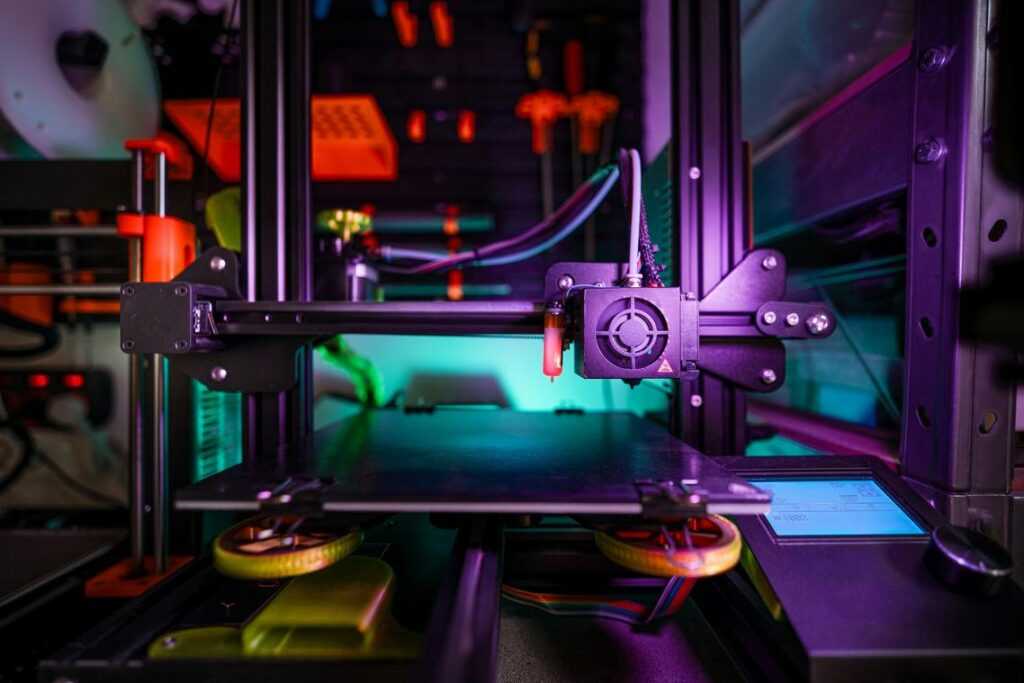
I’ve been testing 3D printers for years and what’s happening right now isn’t an upgrade. It’s a complete reset of what’s possible.
You probably still think of 3D printing as that thing that makes plastic toys and takes forever to finish. That was true five years ago. It’s not anymore.
Here’s what changed: the materials got stronger, the speeds got faster, and the applications moved from your garage into operating rooms and factory floors.
I’m talking about printed organs that actually work. Manufacturing parts that outperform traditional methods. Buildings going up in days instead of months.
The future of 3D printing etrstech is covering isn’t some distant concept. It’s happening now in labs and production facilities around the world.
I’ve spent months hands-on with the latest equipment and digging through research that most people won’t see for another year. The gap between what 3D printing was and what it is today? It’s massive.
This guide walks through the biggest breakthroughs that are reshaping entire industries. You’ll see exactly how far the technology has come and where it’s making the biggest impact right now.
No hype about the distant future. Just the real advancements that are changing manufacturing, medicine, and construction today.
Advancement 1: The Material Revolution – Beyond Basic Plastics
Remember when 3D printing meant one thing? You’d print a plastic widget in your garage and call it a day.
Those days are gone.
The material game has changed completely. We’re not talking about basic PLA filaments anymore.
Multi-material printing lets you run a single job with different materials at once. Think rigid plastics combined with flexible elastomers in the same part. You can print a phone case with a hard shell and soft grip areas without stopping the machine or gluing pieces together.
It’s like cooking a meal where your oven knows exactly when to switch from baking to broiling without you touching a dial.
But that’s just the surface.
Metal printing has matured fast. Direct Metal Laser Sintering (DMLS) and Selective Laser Melting (SLM) now produce aerospace-grade components. We’re talking titanium and aluminum parts that pass the same tests as traditionally manufactured pieces.
Boeing uses these methods for aircraft parts. Not prototypes. Actual flying components (which should tell you something about where the future of 3d printing Etrstech is headed).
Then there’s bioprinting.
Scientists print with living cells now. They create tissue scaffolds that help your body rebuild itself. Custom implants that match your exact anatomy. Research models that let doctors practice complex surgeries before touching a real patient.
The materials are biocompatible. Your body doesn’t reject them.
And because people keep asking about sustainability, yes, that’s moving too. Recycled plastics work in many printers now. Biodegradable materials like PHA break down naturally instead of sitting in landfills for centuries.
The material revolution isn’t coming. It’s here.
Advancement 2: Speed, Scale, and Precision Unleashed
Remember when a single 3D print took three days?
I do. And honestly, I thought that was just the price we paid for this kind of manufacturing.
Turns out I was wrong.
Volumetric Additive Manufacturing changed everything. VAM doesn’t build objects layer by layer like traditional methods. It cures entire objects at once using intersecting light beams. What used to take 48 hours now finishes in minutes. As the gaming industry embraces Volumetric Additive Manufacturing, innovations like Etrstech are revolutionizing the way creators design and produce intricate game assets, slashing production times from days to mere minutes.
Some engineers tell me this is overkill. They say standard FDM is good enough for most applications and we don’t need to push speed this hard.
But here’s my take.
Speed isn’t just about convenience. When you can print in hours instead of days, you change what’s possible. Prototyping becomes real iteration. Small batch production becomes viable. The future of 3d printing etrstech depends on this kind of speed (and we’re just getting started).
Then there’s the scale issue.
We’re printing car chassis now. Full construction components. Furniture that doesn’t need assembly. These gantry systems move print heads across areas the size of small rooms, building objects that would’ve been impossible five years ago.
I’ll be honest though. Large format printing impresses people at trade shows but the real game changer? It’s the AI integration.
Machine learning algorithms now handle what used to take me hours of manual setup. They calculate optimal print orientation automatically. They generate support structures that actually make sense. And the real-time error correction? It catches problems before they ruin an entire print job.
This matters because failed prints aren’t just annoying. They waste material and time.
On the flip side, we’ve got micro-stereolithography printing details smaller than a human hair. Medical devices with features you need a microscope to see. Electronics components that push the limits of what I thought was physically possible.
The contrast is wild. We can print a building component and a microscopic sensor array with variations of the same base technology.
Application Spotlight: Transforming Healthcare and Medicine
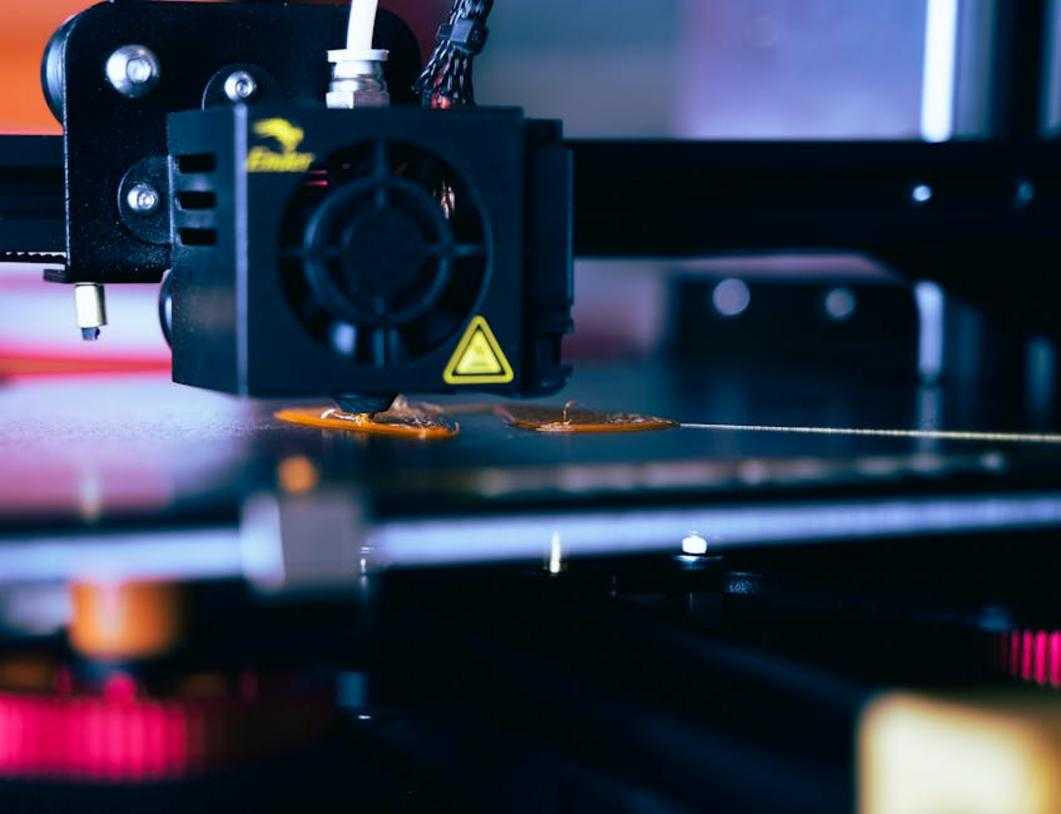
3D printing is changing how we treat patients.
I’m not talking about some distant future scenario. This is happening right now in hospitals across the country.
Some people argue that traditional manufacturing still does the job just fine. They say 3D printing is too slow or too expensive for real medical applications. And sure, mass production still makes sense for standard equipment.
But here’s what that view misses.
When you need something that fits ONE specific patient? That’s where everything changes.
Patient-Specific Surgical Guides & Implants
Surgeons can now take your CT or MRI scan and print a guide that shows them exactly where to cut. No guessing. No approximations.
The same goes for implants. Need a cranial plate after an injury? They print one that matches your skull perfectly. Joint replacements get the same treatment. I walk through this step by step in Emerging Tech Trends Etrstech.
The accuracy improvement is real. We’re talking about procedures that used to take hours now finishing faster with better outcomes.
Custom Prosthetics and Orthotics
Here’s where things get personal.
A kid who needs a prosthetic limb will outgrow it. Fast. Traditional prosthetics cost thousands and take weeks to make. By the time you get it, the fit might already be off. As the gaming community eagerly awaits the next wave of innovations, the latest Etrstech Technology Updates From Etherions promise to revolutionize not just entertainment, but also the lives of children in need of adaptive solutions like prosthetics that can grow with them.
3D printing flips this completely. You can print a lightweight prosthetic in days for a fraction of the cost. When the kid grows? Print another one.
The same applies to braces and orthotics. Custom fit without the custom price tag (or the wait time).
Pharmaceuticals and Drug Delivery
This one sounds like science fiction but it’s real.
Researchers are printing pills that contain multiple medications. Each drug releases at different times based on how the pill is structured. They call them polypills.
Think about someone taking five different medications at different times each day. Now imagine one pill that does all of it on the right schedule.
We’re still early here. But the future of 3d printing etrstech is pointing toward truly personalized medicine.
On-Demand Medical Equipment
Remember when COVID hit and we ran out of ventilator parts?
Hospitals with 3D printers didn’t have that problem. They printed what they needed.
The same goes for:
• Testing swabs
• Valve components
• Surgical tools
• Emergency supplies
Remote clinics can now print equipment on-site instead of waiting for shipments. Supply chain issues become less critical when you can MAKE what you need.
This isn’t about replacing everything. It’s about having options when you need them most.
Application Spotlight: The New Era of Manufacturing and Consumer Goods
You want products made for YOU, not some average person who doesn’t exist.
That’s where 3D printing changes everything.
Companies can now print custom-fit earbuds that match your exact ear shape. Shoe insoles molded to your feet. Even car interior parts tailored to your preferences. This isn’t some distant future. It’s happening RIGHT NOW.
The old model? Make a million identical units and hope people buy them. The new model? Print what each customer actually wants.
Here’s what you need to know about the future of 3d printing etrstech and how it’s reshaping manufacturing.
Digital warehouses are replacing physical ones. Instead of storing thousands of spare parts that might sit for years, manufacturers keep digital files. Need a replacement part? They print it on demand. Less waste. Lower costs. Faster delivery.
Some people argue this only works for niche products. That traditional manufacturing will always be cheaper for mass production.
They’re missing the point. How Automated Storage Works Etrstech is where I take this idea even further.
This isn’t about replacing everything. It’s about filling gaps that traditional methods can’t touch. Custom medical devices. Rare vintage car parts. Products for small markets that don’t justify a factory line.
For product development, speed matters more than ever. You can print a working prototype in hours instead of weeks. Test it. Tweak the design. Print another one the same day. Assembly line workers get custom jigs and fixtures printed overnight instead of waiting months for tooling. In a world where rapid innovation is crucial, companies are turning to Etrstech to revolutionize their product development processes, enabling them to swiftly create, test, and refine prototypes in a matter of hours rather than weeks.
My recommendation? If you’re in manufacturing or product design, START experimenting with 3D printing now. Not next year. The companies figuring this out today will own their markets tomorrow.
Printing the Future, Today
The old limits of 3D printing are gone.
You’ve seen how smarter materials are changing what’s possible. Faster speeds mean production at scale. AI integration is making the process more precise than ever.
These aren’t just incremental improvements. They’re opening doors that didn’t exist before.
Doctors are printing custom organs. Manufacturers are creating parts that were impossible to make five years ago. The applications keep expanding.
Here’s what I want you to do: Think about your own industry. Where could this technology fit? What problems could it solve that you’re dealing with right now?
The future of 3d printing etrstech is already here. It’s just waiting for people to put it to work.
We’ll be diving deeper into specific technologies in upcoming guides. You’ll get the details you need to understand how each one works and where it makes sense to use it.
The question isn’t whether this technology will change things. It’s whether you’ll be ready when it does. Etrstech.
 There is a specific skill involved in explaining something clearly — one that is completely separate from actually knowing the subject. Jexor Veythorne has both. They has spent years working with latest technology news in a hands-on capacity, and an equal amount of time figuring out how to translate that experience into writing that people with different backgrounds can actually absorb and use.
Jexor tends to approach complex subjects — Latest Technology News, Software Development Insights, Emerging Technology Trends being good examples — by starting with what the reader already knows, then building outward from there rather than dropping them in the deep end. It sounds like a small thing. In practice it makes a significant difference in whether someone finishes the article or abandons it halfway through. They is also good at knowing when to stop — a surprisingly underrated skill. Some writers bury useful information under so many caveats and qualifications that the point disappears. Jexor knows where the point is and gets there without too many detours.
The practical effect of all this is that people who read Jexor's work tend to come away actually capable of doing something with it. Not just vaguely informed — actually capable. For a writer working in latest technology news, that is probably the best possible outcome, and it's the standard Jexor holds they's own work to.
There is a specific skill involved in explaining something clearly — one that is completely separate from actually knowing the subject. Jexor Veythorne has both. They has spent years working with latest technology news in a hands-on capacity, and an equal amount of time figuring out how to translate that experience into writing that people with different backgrounds can actually absorb and use.
Jexor tends to approach complex subjects — Latest Technology News, Software Development Insights, Emerging Technology Trends being good examples — by starting with what the reader already knows, then building outward from there rather than dropping them in the deep end. It sounds like a small thing. In practice it makes a significant difference in whether someone finishes the article or abandons it halfway through. They is also good at knowing when to stop — a surprisingly underrated skill. Some writers bury useful information under so many caveats and qualifications that the point disappears. Jexor knows where the point is and gets there without too many detours.
The practical effect of all this is that people who read Jexor's work tend to come away actually capable of doing something with it. Not just vaguely informed — actually capable. For a writer working in latest technology news, that is probably the best possible outcome, and it's the standard Jexor holds they's own work to.